
"Uncertainty Quantification Using Martingales for Misspecified Gaussian Processes"
Aaditya Ramdas
2020 Invited Talk
in
Workshop: Real World Experiment Design and Active Learning
in
Workshop: Real World Experiment Design and Active Learning
Speaker
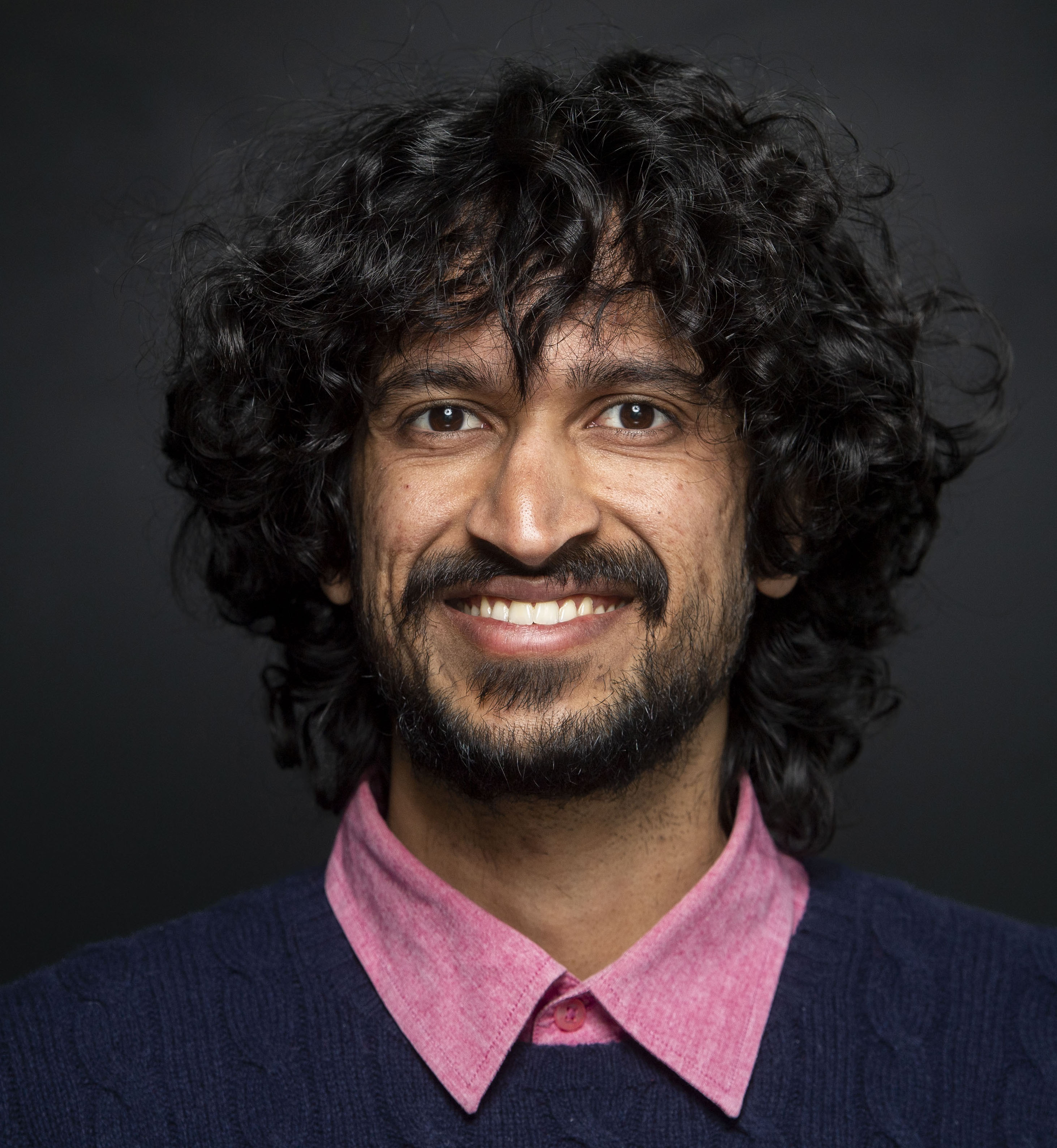
Aaditya Ramdas
Aaditya Ramdas is an Associate Professor at Carnegie Mellon University in the Department of Statistics and Data Science and the Machine Learning Department, as well as a visiting academic at Amazon Research. He was a postdoc at UC Berkeley (2015–2018) mentored by Michael Jordan and Martin Wainwright, and obtained his PhD at CMU (2010–2015) under Aarti Singh and Larry Wasserman, receiving the Umesh K. Gavaskar Memorial Thesis Award. His undergraduate degree was in Computer Science from IIT Bombay (2005-09, All India Rank 47).
His work has been recognized by the Presidential Early Career Award (PECASE), the highest distinction bestowed by the US government to young scientists. He has also received a Kavli fellowship from the National Academy of Science, a Sloan fellowship in Mathematics, the CAREER award from the National Science Foundation, the Emerging Leader Award from COPSS (Committee of Presidents of Statistical Societies), early career awards from the Bernoulli Society and the Institute of Mathematical Statistics, and faculty research awards from Adobe and Google.
He regularly publishes at top journals like The Annals of Statistics, Biometrika and IEEE Transactions on Information Theory, including prestigious discussion papers at the Journal of the Royal Statistical Society and Journal of the American Statistical Association, and at the top AI conferences like NeurIPS and ICML, including over a dozen orals/spotlights. He has given several keynote talks, including at CUSO, Lunteren, AISTATS and VMCF.
Aaditya's research in mathematical statistics and learning has an eye towards designing algorithms that both have strong theoretical guarantees and also work well in practice. His main interests include post-selection inference (multiple testing, simultaneous inference), game-theoretic statistics (e-values, confidence sequences) and predictive uncertainty quantification (conformal prediction, calibration). His areas of applied interest include privacy, neuroscience, genetics and auditing (elections, real-estate, finance, fairness).
Video
Chat is not available.
Successful Page Load