
When RL Meets Adaptive Speculative Training: A Unified Training-Serving System
Abstract
Lay Summary
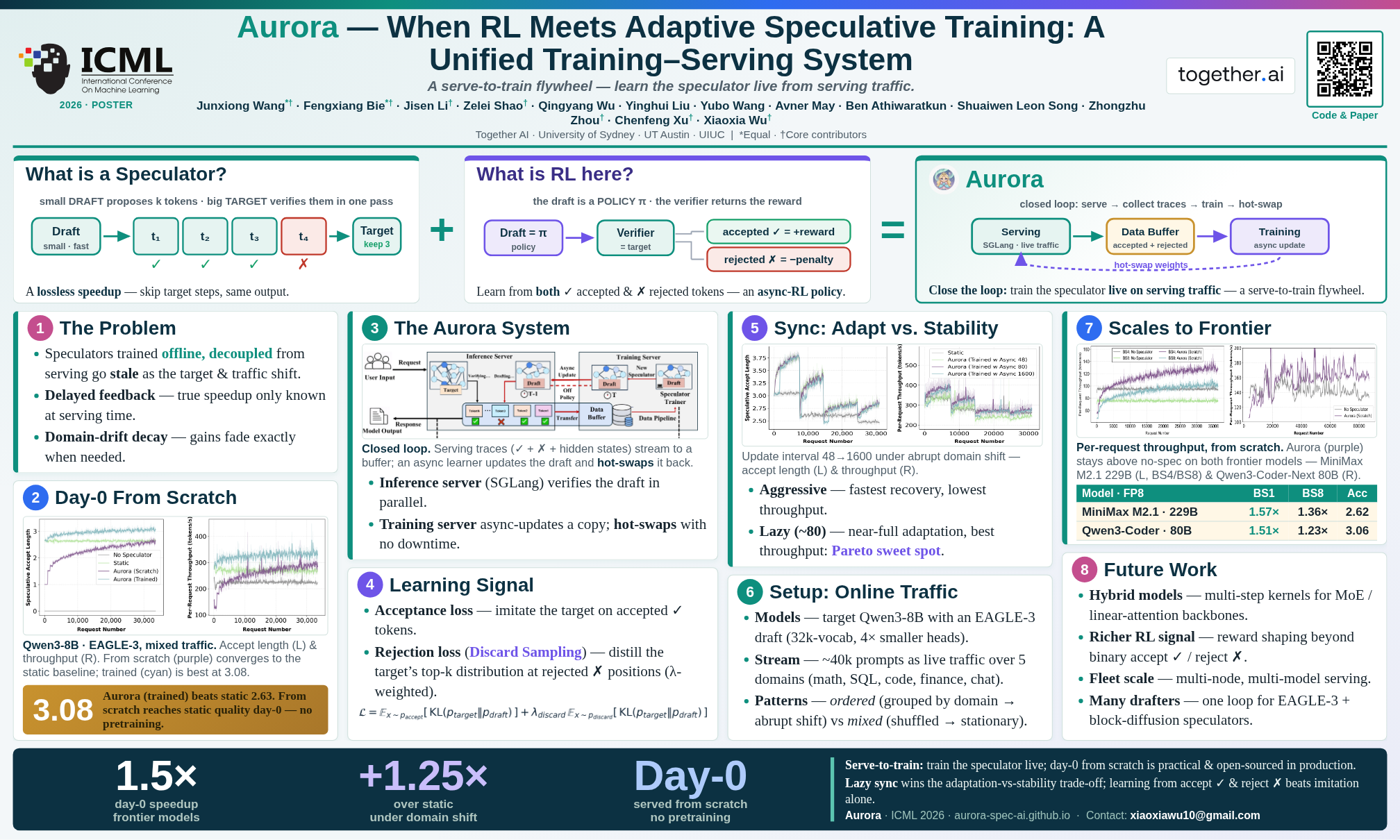
Large AI language models are powerful but slow and expensive to run, because they generate text one word at a time. A popular speed-up trick pairs the big model with a small, fast "helper" that guesses several words ahead, which the big model then quickly checks and accepts—skipping a lot of slow work. The catch: this helper is usually trained once, in advance, and gradually becomes outdated as the kinds of questions real users ask change, so its speed benefit fades. It also requires a long, costly training phase before it helps at all. We built Aurora, a system that trains the helper continuously while the model is actively serving real users. It learns on the fly from which guesses succeed and which fail, and seamlessly swaps in an improved helper without ever interrupting service. Aurora can even start from scratch on the first day a new model is deployed, and quickly becomes useful. In practice, Aurora makes serving today's largest open models about 1.5 times faster and keeps adapting as user demand shifts, lowering the cost, energy, and waiting time of using AI assistants.