
Paper #46: When Machines Decide If a Human Wrote It: Creativity in the Age of AI Detectors
Abstract
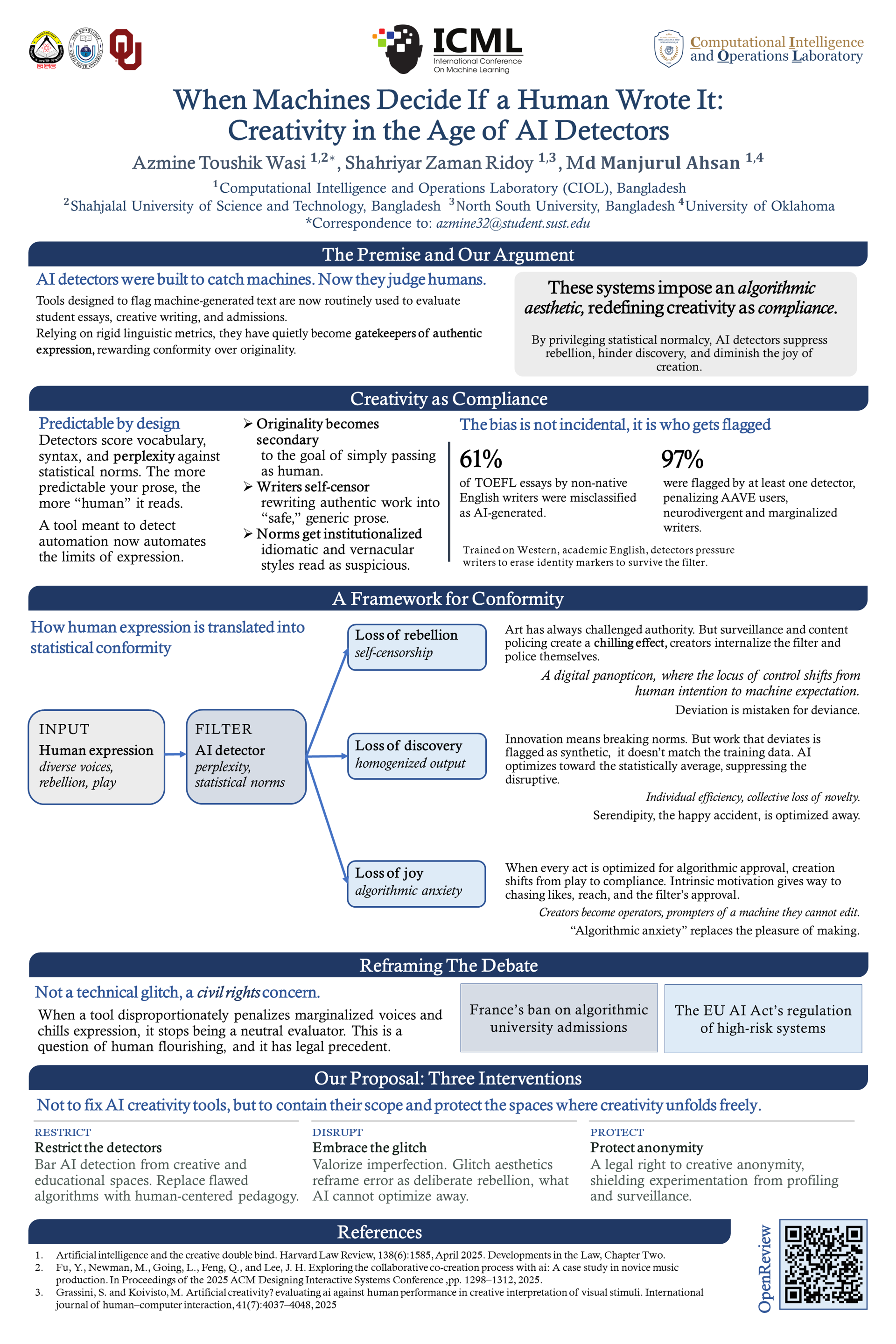
AI detectors, originally developed to flag machine-generated content, are now widely used to evaluate human writing in educational and creative contexts. By relying on rigid linguistic metrics and statistical norms, these systems subtly reshape human expression through algorithmic conformity. Acting as gatekeepers of authentic expression, they privilege conformity over originality and disproportionately penalize non-native English speakers and marginalized voices, causing psychological harm, academic penalties, and cultural erasure. This paper argues that such systems impose an algorithmic aesthetic that suppresses rebellion, hinders discovery, and diminishes the joy of creation. Reframing the issue as one of civil rights and human flourishing, we propose three interventions: restricting AI detectors in creative and educational spaces, promoting glitch aesthetics to valorize imperfection, and protecting creative anonymity to foster free experimentation. Drawing on legal and cultural policy precedents, we contend that these measures are essential to safeguarding human imagination. Ultimately, we advocate for institutional safeguards that champion risk, surprise, and dissent as vital components of a thriving creative future.