
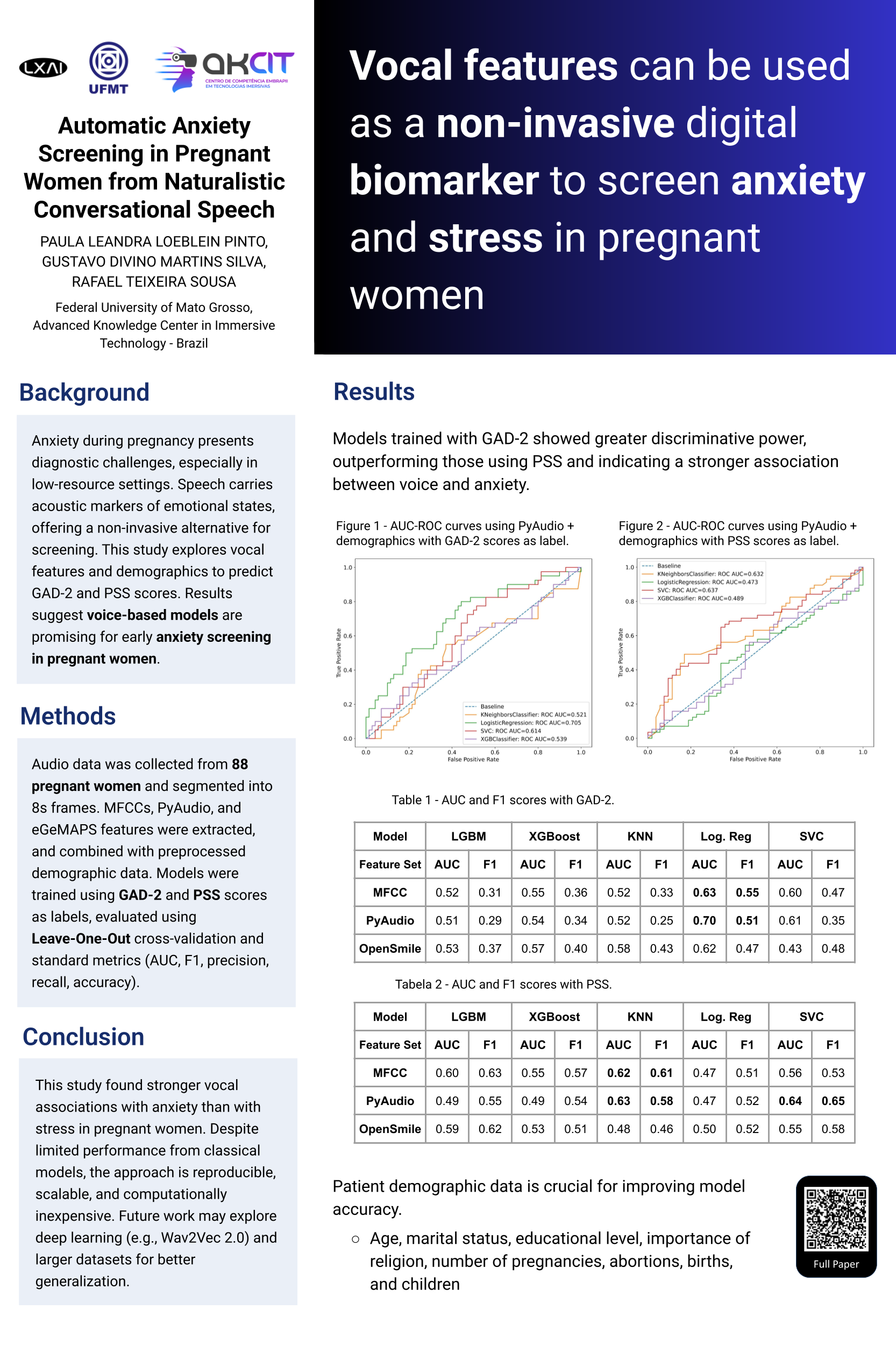
Automatic Anxiety Screening in Pregnant Women from Naturalistic Conversational Speech
Abstract
This study explores the use of Machine Learning to track anxiety in pregnant women through voice analysis of data collected in a maternal health initiative, processed with MFCC, OpenSMILE, and PyAudio in 8-second windows. Ten classification algorithms were initially tested, with five thoroughly evaluated using AUC, F1-score, and accuracy. Logistic Regression using PyAudio features yielded the best results (AUC=0.705, F1-score=0.51), and demographic data improved performance, while ensemble methods may enhance stability, despite the limited dataset. Although promising, these findings require validation on a larger dataset, and the modeling will be refined for robustness and clinical applicability. These results suggest voice analysis represents a promising approach for anxiety screening in pregnancy, offering a potentially accessible and non-invasive tool for early identification and support.